Plan
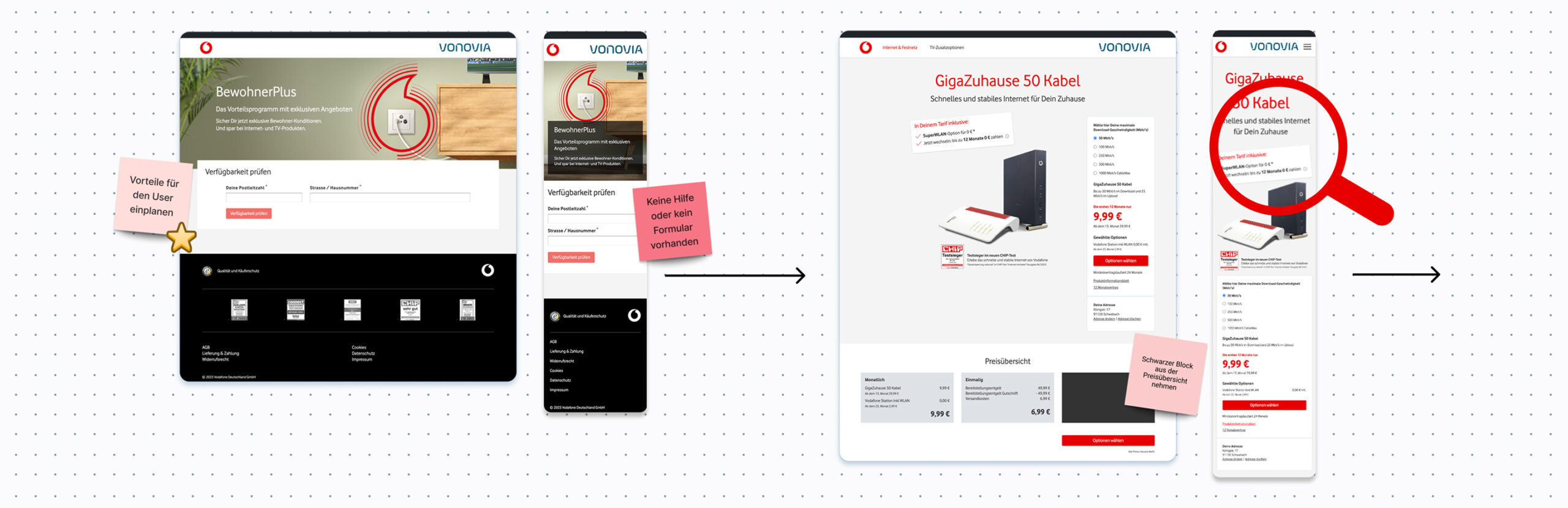
Scenario-based wireframes & user flows
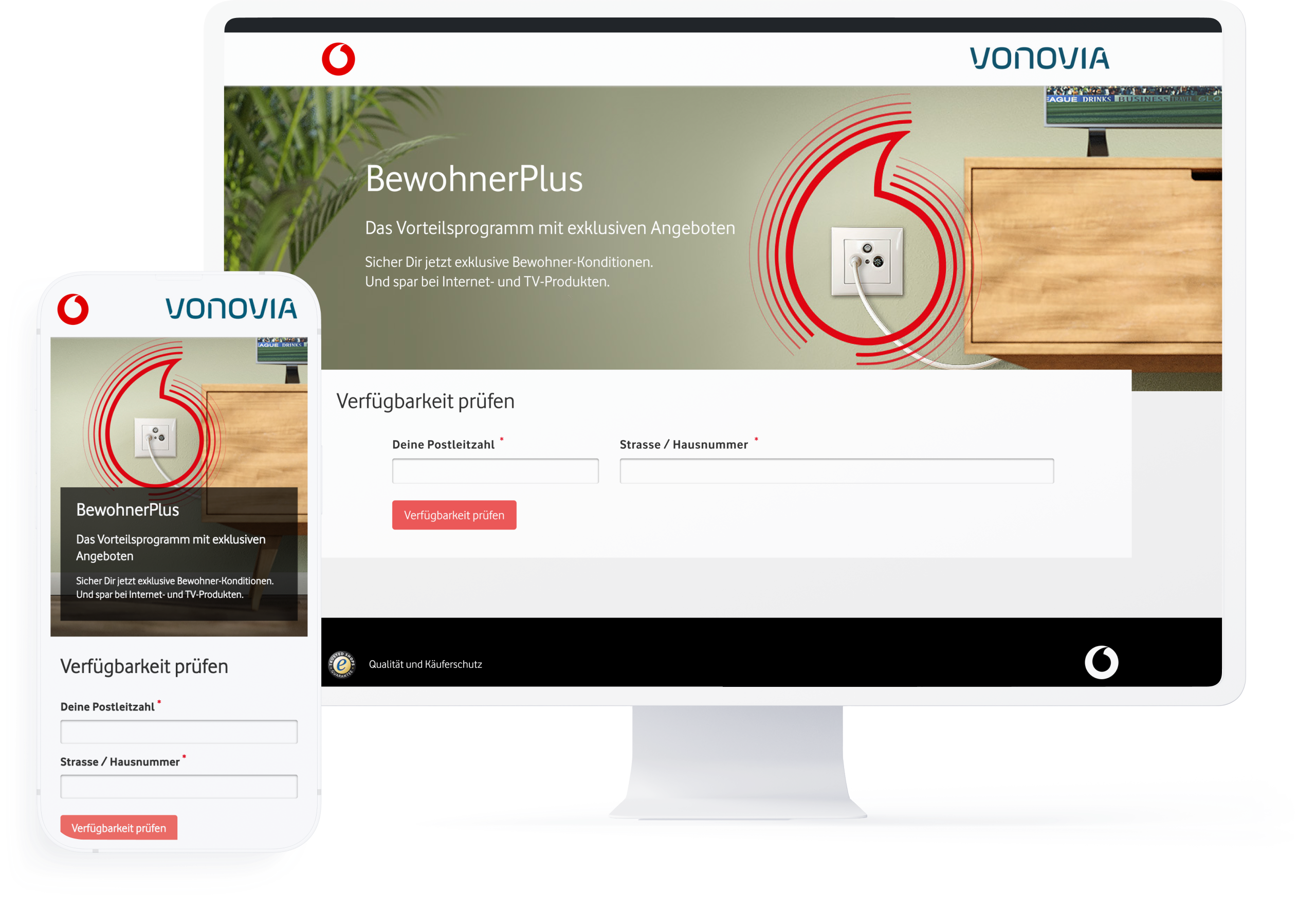
We translated the analytical insights from Phase 1 directly into scenario-based wireframes. Our goal was to design a user journey that specifically centers on customer need.
In order to meet Vodafone BewohnerPlus’s sales objectives, we split the user guidance into two strategic streams:
- Differentiated Use Cases – We developed a multi-product flow that intuitively handles the complex selection and bundling of multiple products.
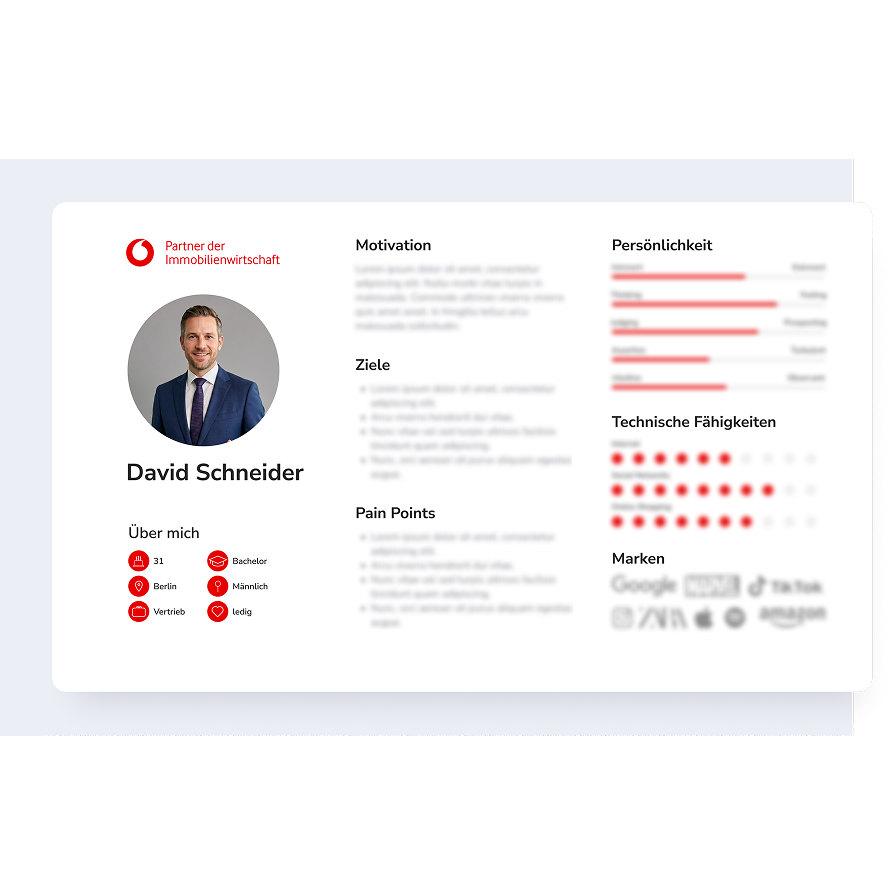
Simultaneously, we designed an efficient single checkout for users focused on a specific individual product. - Target Group Specific UX – This architectural separation ensures that the design remains scalable. It precisely targets every user type – from quick deciders to those needing guidance. At the same it still keeps usability clear; even for complex carts (avoiding cognitive overload).
Design
UI design & guidance: Transparency via guided processes
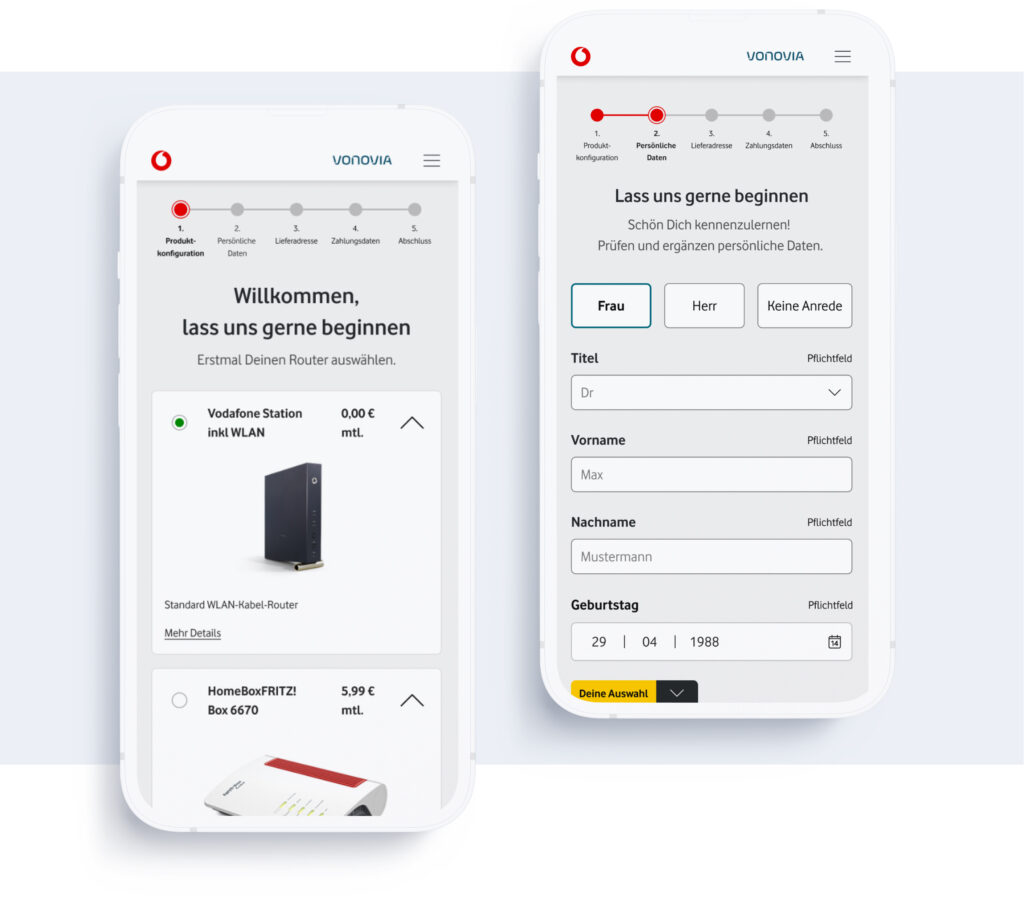
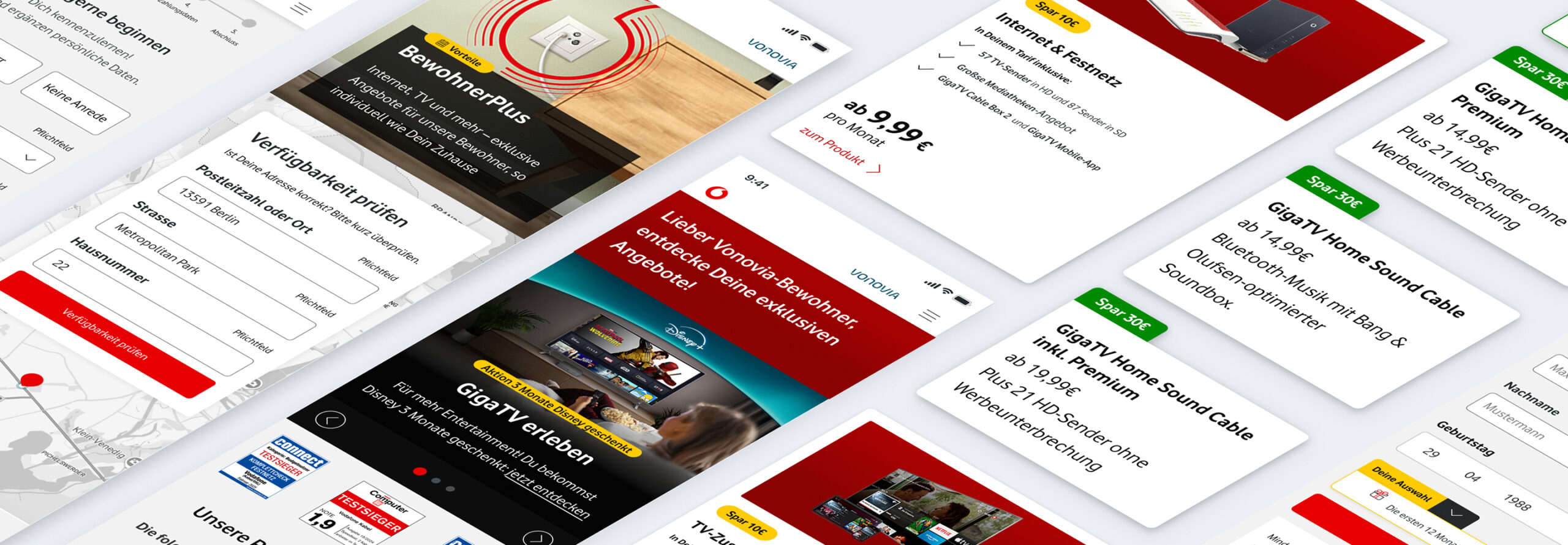
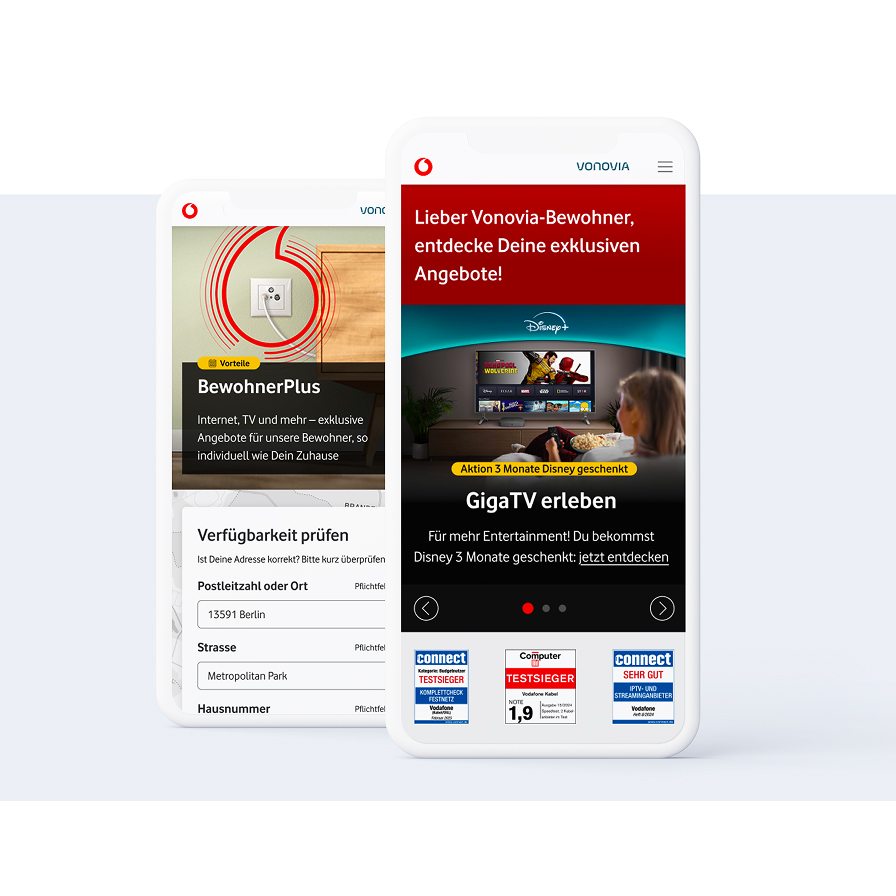
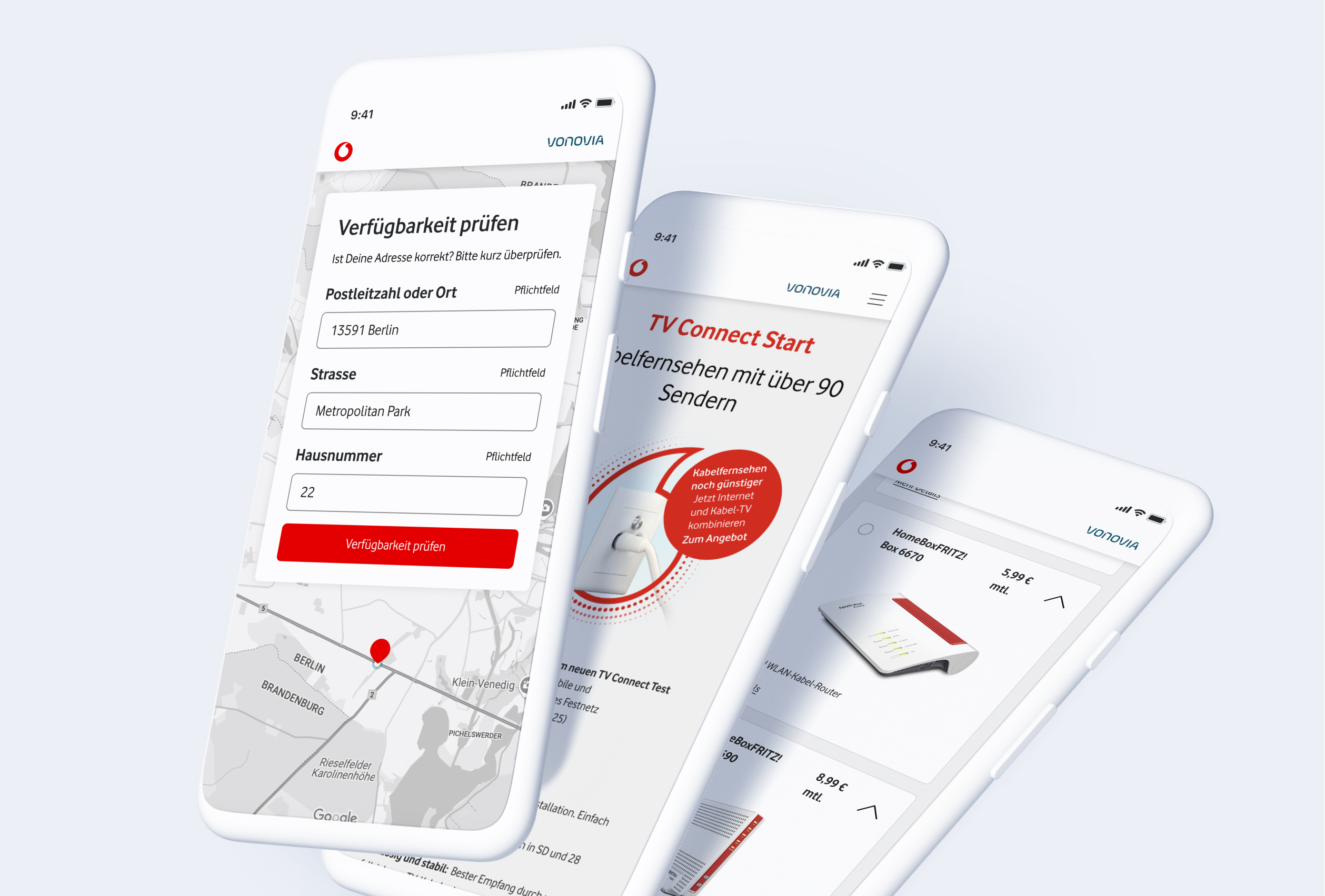
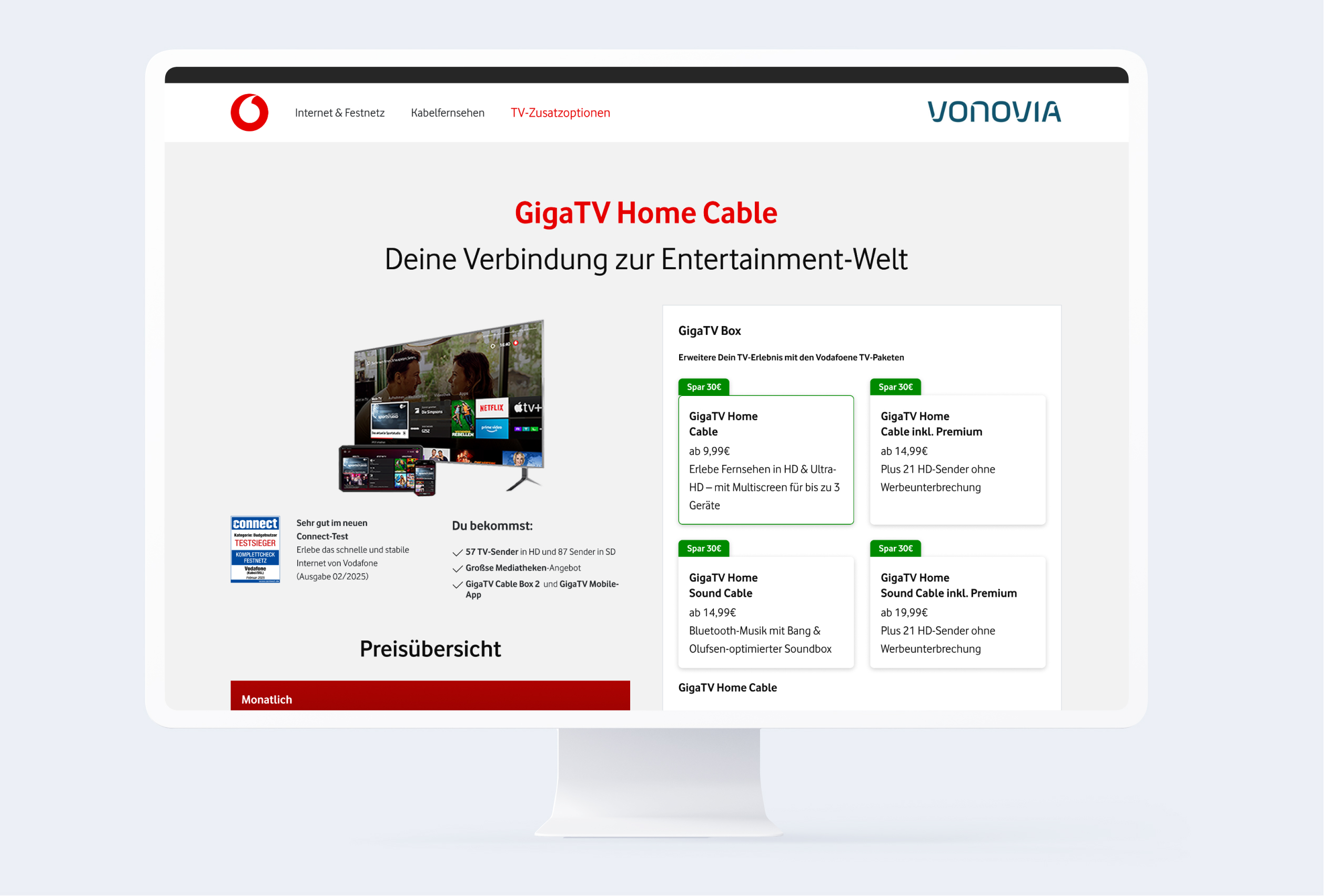
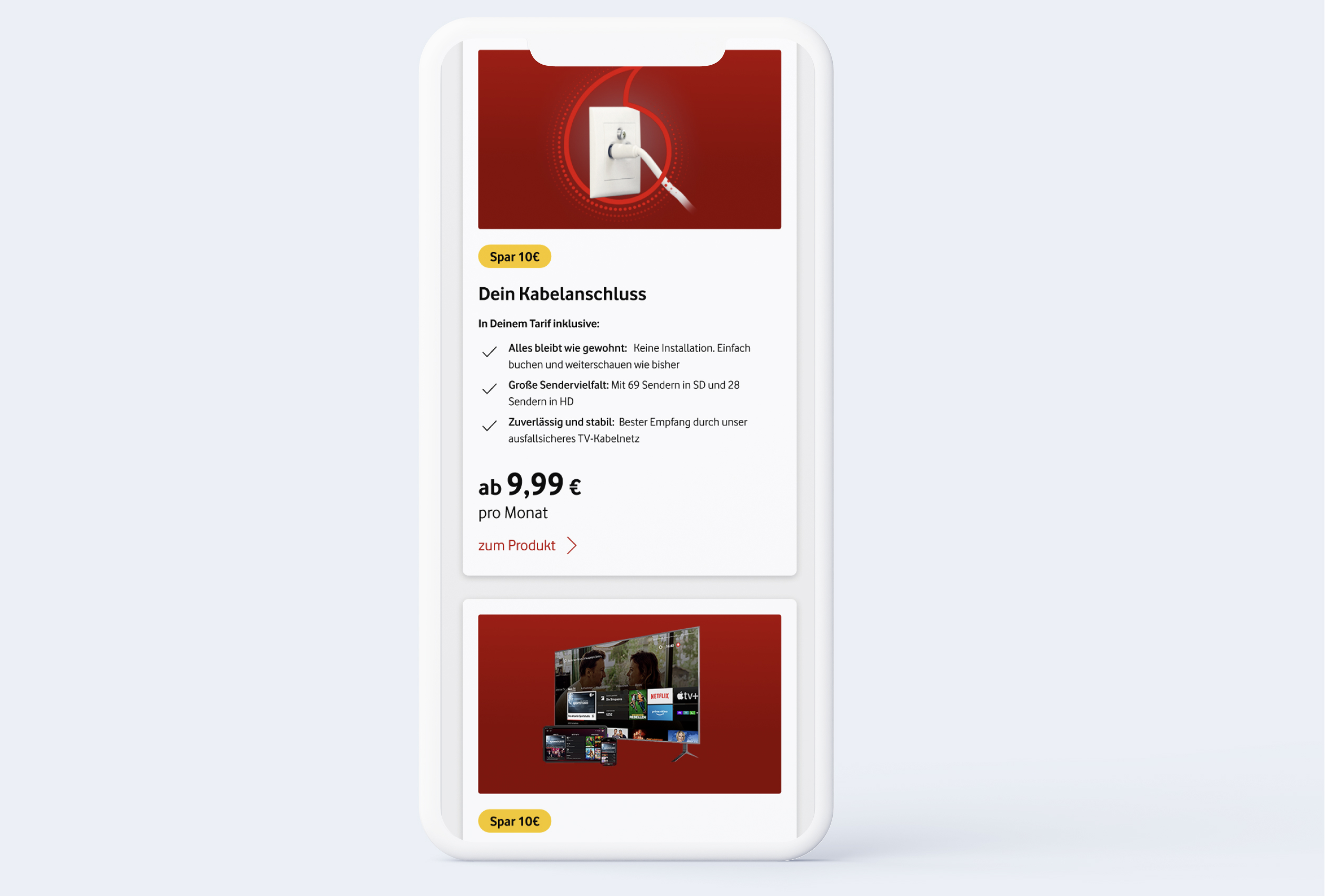
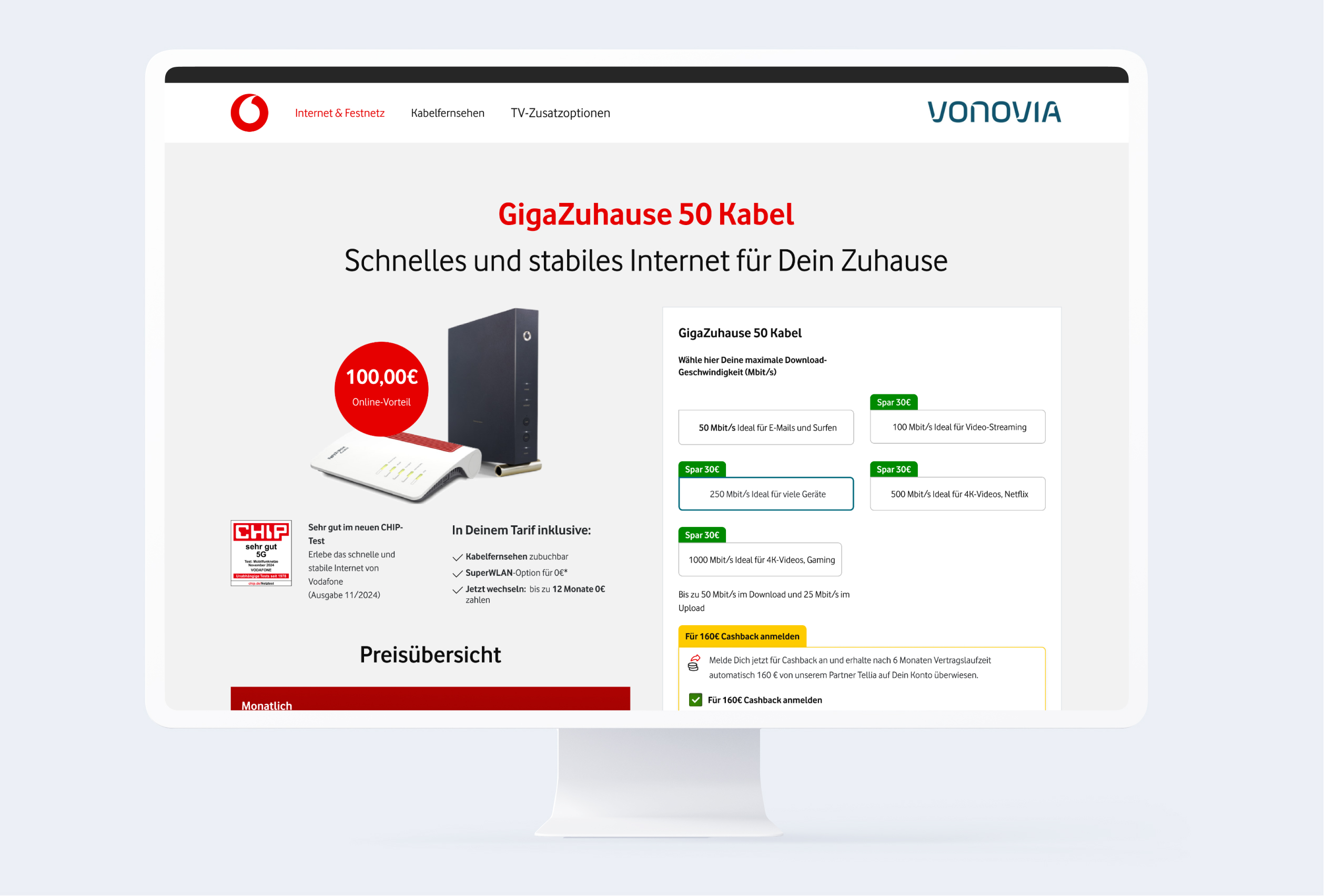
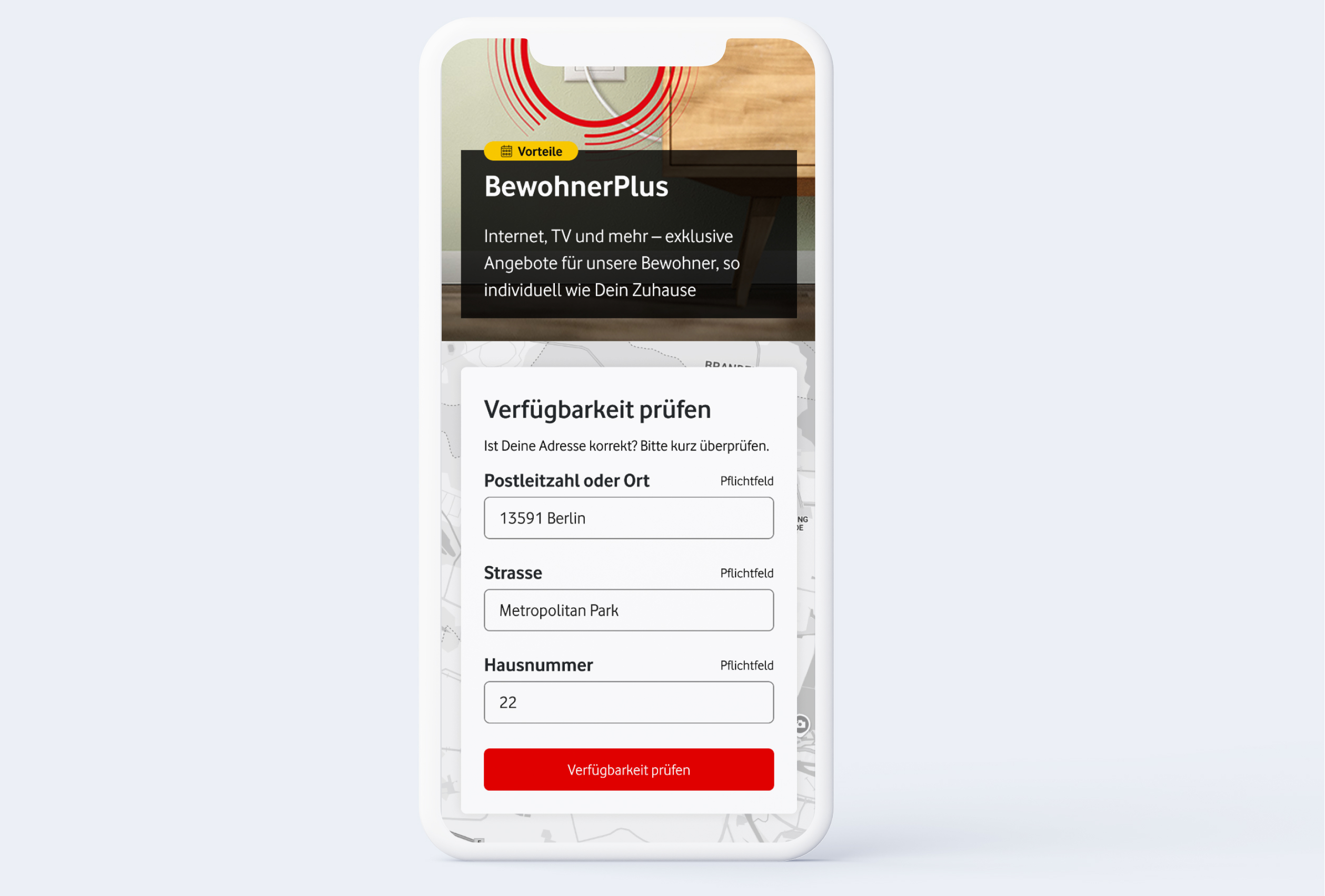
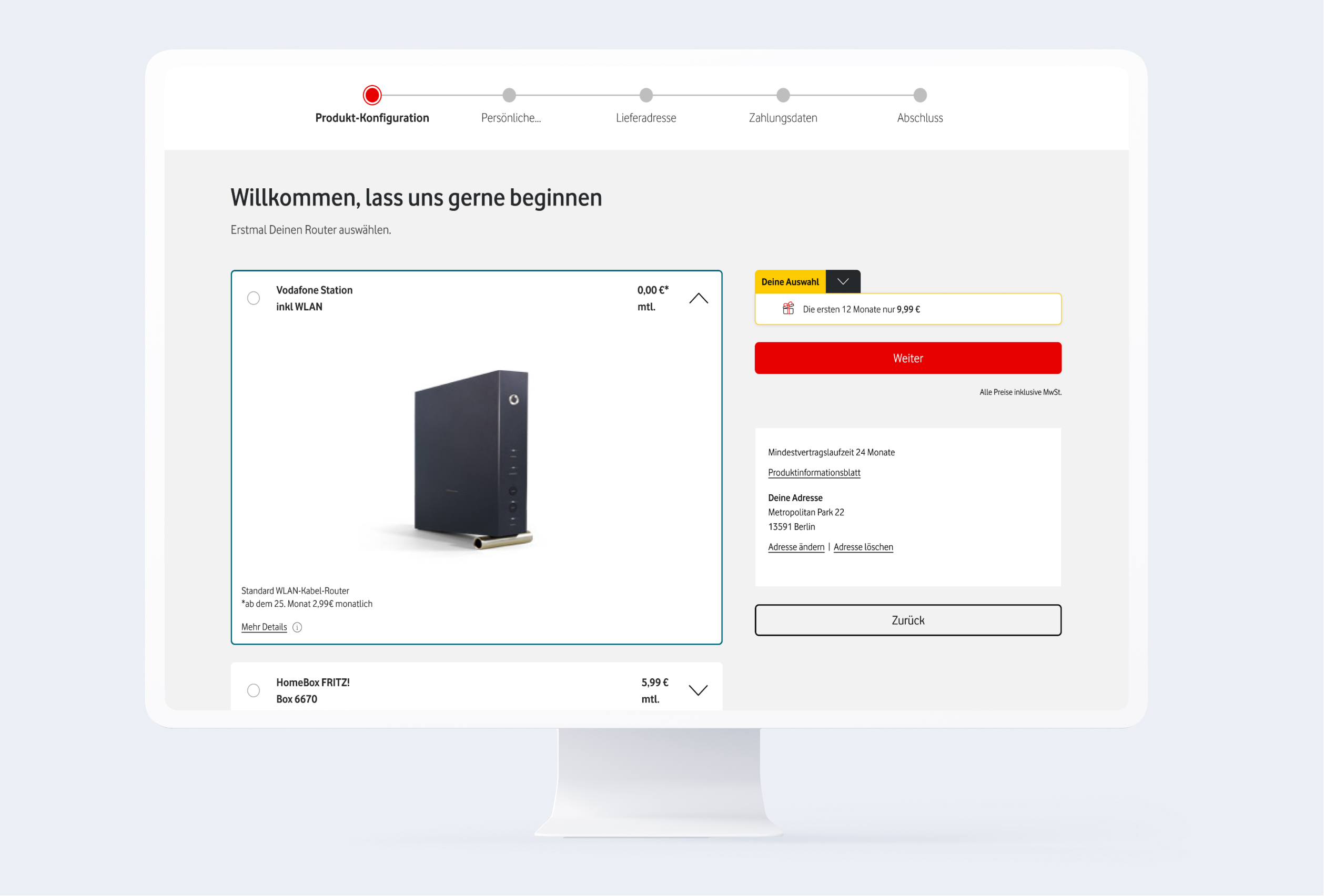
In the final UI design, we transformed concepts into high-fidelity prototypes for mobile and desktop applications. We followed Vodafone’s Corporate Identity (CI) strictly to ensure seamless and trustworthy brand consistency across all touchpoints.
- Structuring via Wizard: To simplify navigation we implemented a step-by-step wizard. This approach breaks down complex selection processes into small, understandable units (reduction of cognitive load). It guides users safely through the funnel and measurably lowers drop-off rates.
- Guidance & Transparency: We optimized the information architecture using contextual help elements like tooltips, infoboxes, and accordions. These functions deliver explanations exactly “on-demand” at the point where questions might arise. The result is maximum price transparency; eliminating uncertainties and strengthening user trust throughout the entire customer journey.
Optimize
Usability testing & BFSG compliance: Validated data over hypotheses
Design hypotheses are good; validated data is better. To eliminate subjective assumptions, we put our concepts to the test. Our testing approach pursued a dual aim: validate the user experience (UX) and simultaneously ensure BFSG accessibility.
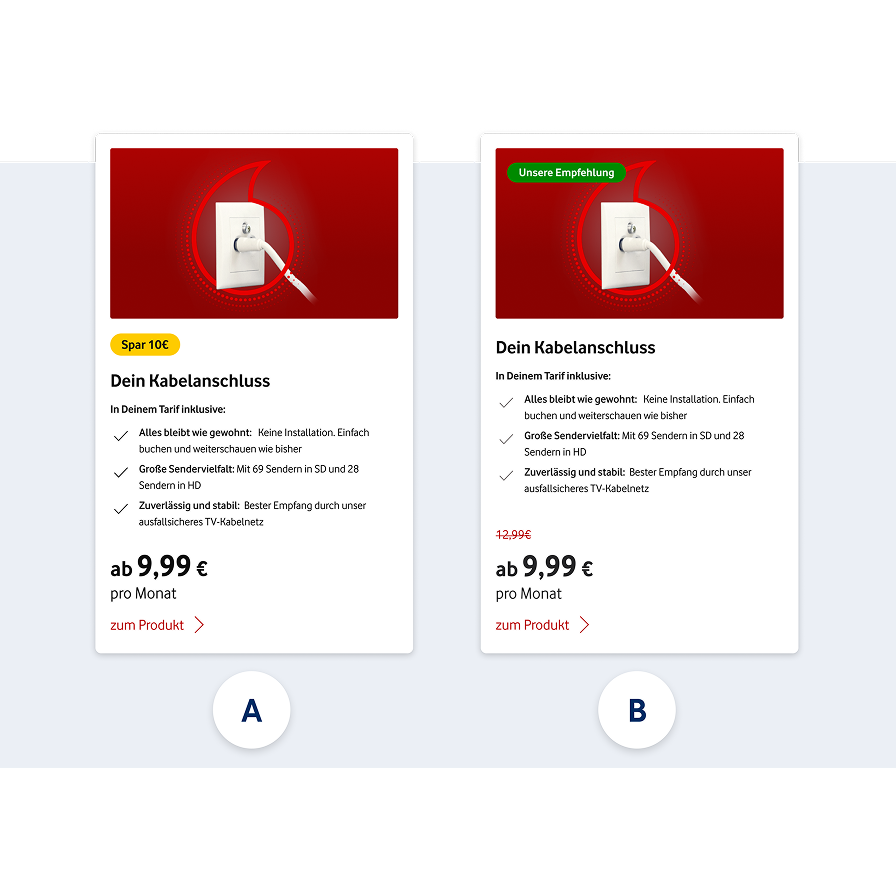
- A/B Testing & UX Validation: We tested alternative variants for critical interaction points, which secured compliance and identified the solution offering the best experience based on data.
- Data-Driven Flow Optimization: Test feedback flowed directly into development. We implemented validated-only changes to guarantee a final process based on real user feedback, which effectively eliminated friction at the checkout.